
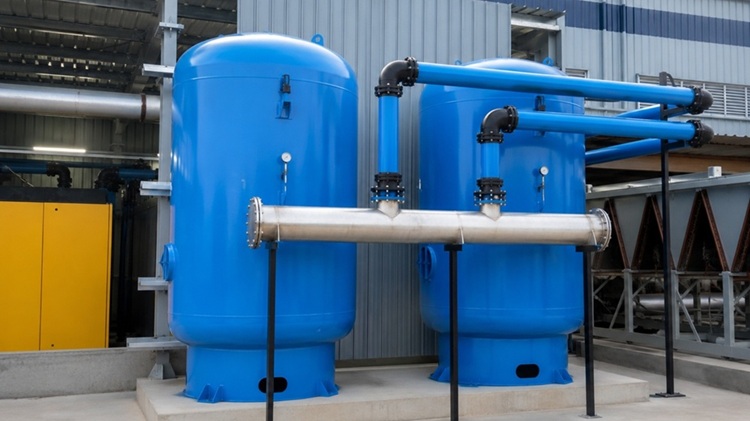
Compressed air is an essential utility for modern manufacturing plants, workshops, process industries, engineering facilities, and production units across India. A properly planned compressed air piping installation ensures that compressed air reaches every machine with stable pressure, adequate flow, and minimum energy loss. The piping network connects the compressor, air receiver, dryer, filters, distribution headers, branch lines, and final points of use into one efficient system.
A poorly designed pipeline can create pressure drops, air leakage, moisture problems, unnecessary energy consumption, and inconsistent equipment performance. For this reason, industrial facilities need a professionally designed and correctly installed compressed air distribution network. Proper pipe sizing, efficient routing, suitable materials, drainage, supports, and future expansion requirements should all be considered before installation.
Why Professional Compressed Air Piping Installation Matters?
The objective of compressed air piping installation is not simply to connect a compressor to production equipment. The complete network must be designed around the facility’s actual air demand, operating pressure, pipe length, number of fittings, and future requirements. An undersized pipeline can restrict airflow and create pressure losses, while excessive bends and poorly selected fittings can further increase resistance.
The Bureau of Energy Efficiency recommends practices such as ring-main distribution, optimum pipe sizing, appropriate drainage, minimized bends, and proper condensate management for compressed air systems. These measures can contribute to more reliable and efficient air distribution in industrial applications.
A professionally executed installation also makes maintenance easier. Isolation valves can be positioned strategically, drains can be provided at suitable locations, and branch connections can be arranged according to production requirements. This allows sections of the network to be serviced without unnecessarily interrupting the entire plant.
Key Elements of an Industrial Compressed Air Pipeline
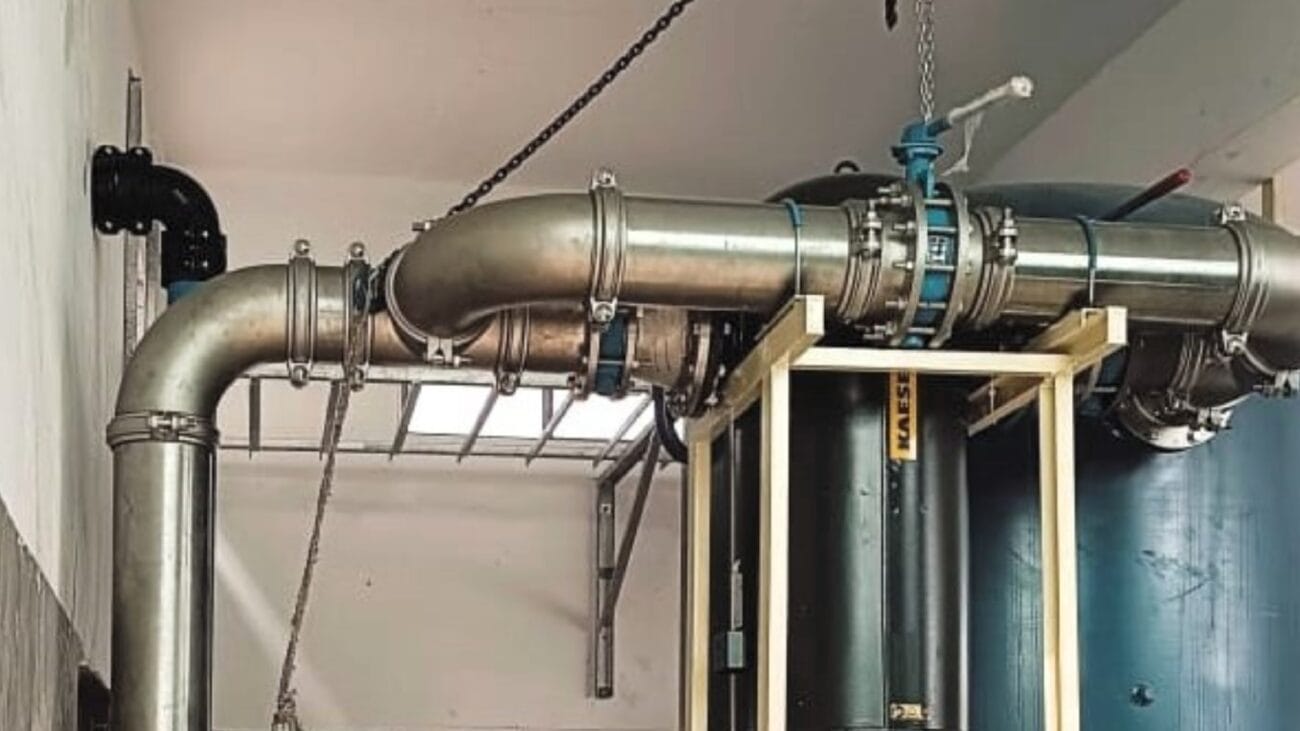
A complete compressed air piping installation generally includes the main header, distribution piping, service lines, valves, fittings, drain points, supports, and connections to pneumatic equipment. The system may also integrate air receivers, dryers, filters, moisture separators, and other air-treatment equipment depending on the application.
The pipeline layout should be developed after understanding the location and air requirements of every major consumer. Production areas with high or intermittent air demand may require dedicated distribution arrangements or additional storage close to the point of consumption.
| System Component | Main Function |
|---|---|
| Main Header | Carries compressed air across the facility |
| Distribution Line | Supplies air to different production zones |
| Branch Pipe | Connects the main network to individual areas |
| Service Line | Delivers air to machines and tools |
| Valves | Provide isolation and flow control |
| Drain Points | Help remove accumulated condensate |
| Air Receiver | Provides storage and helps balance demand |
| Filters & Dryer | Improve compressed air quality |
Designing the Right Piping Layout
The design stage is one of the most important parts of compressed air piping installation. Engineers should evaluate compressor capacity, peak air demand, operating pressure, distance between equipment, pipe diameter, fittings, and expected future expansion before selecting the final layout.
A ring-main configuration can be useful for larger industrial facilities because compressed air can reach consumption points from more than one direction. This can help distribute pressure more evenly when demand changes across different areas. Properly designed branch lines then connect the ring main to individual machines and workstations.
Pipe routing should also minimize unnecessary bends, long dead-end sections, and restrictive fittings. Every additional bend or restriction can contribute to pressure loss. The pipeline should therefore be planned to provide an efficient route while still allowing convenient access for maintenance and future modifications.
Pipe Sizing and Pressure Drop Control
Correct pipe sizing is critical for reliable compressed air piping installation. The pipe diameter should be selected according to airflow requirements, operating pressure, total pipe length, fittings, and acceptable pressure drop. Choosing a pipe simply based on the compressor outlet size can result in an inefficient distribution system.
Pressure loss can occur because of friction inside the pipe as well as restrictions created by valves, elbows, couplings, filters, and other components. A correctly sized system helps maintain the required pressure at the most distant point of consumption without unnecessarily increasing compressor pressure.
Oversizing a pipeline can increase initial material costs, but undersizing can create higher operating costs and production problems over time. Therefore, the right balance between installation cost, current demand, and future expansion should be considered during the design process.
Moisture Drainage and Condensate Management
Moisture management is another important consideration during compressed air piping installation. Compressed air systems can generate condensate, and poor drainage arrangements may allow moisture to reach pneumatic tools, control equipment, and production processes.
The main pipeline should be designed with suitable slope and drain points to support condensate removal. The Bureau of Energy Efficiency recommends appropriate slope, drain spacing, automatic drain traps, and moisture-management provisions in compressed air distribution systems.
Branch connections should also be planned carefully so that collected moisture does not unnecessarily enter machine lines. Proper drainage, air treatment, filtration, and regular maintenance can help improve the quality and reliability of compressed air delivered to production equipment.
Professional Installation for Industrial Applications
Industrial compressed air piping installation requires careful execution because the network may operate continuously and serve critical production machinery. Installation involves pipe measurement, routing, cutting or preparation, joint assembly, supports, valves, drops, drainage provisions, and connections to equipment.
The installation team should ensure that pipelines are securely supported and routed without creating unnecessary stress on joints or connected machinery. The final system should also be inspected for leakage, pressure stability, drainage performance, and correct operation before being placed into regular service.
Professional installation is particularly important for manufacturing plants, automotive facilities, pharmaceutical units, food-processing plants, textile factories, packaging facilities, engineering workshops, and other industries where dependable compressed air is essential to production.
Benefits of a Properly Installed Compressed Air System
A professionally designed compressed air piping installation can provide several operational benefits. Efficient pipe sizing and routing can help control pressure losses, while suitable drainage can reduce moisture-related problems. Properly positioned valves and service connections can also simplify maintenance and future modifications.
A well-planned network can support consistent air delivery to production equipment while reducing avoidable restrictions and leakage points. It can also provide a structured foundation for future plant expansion, allowing additional machines or production zones to be connected without completely redesigning the existing system.
For Indian industrial facilities, choosing the right piping configuration and installation approach should therefore be considered a long-term investment rather than simply an installation expense.
Choosing an Expert Industrial Piping Solution
Selecting an experienced industrial piping contractor can make a significant difference to the performance of a compressed air network. Before beginning a compressed air piping installation, the project should include a proper site assessment, air-demand evaluation, pipeline route planning, pipe sizing, material selection, and installation strategy.
The contractor should understand the plant’s operating requirements and provide a solution designed around actual production conditions. The system should also consider accessibility, safety, maintenance requirements, future expansion, and overall lifecycle performance.
With a professionally engineered approach, industrial businesses can develop a compressed air distribution system that supports reliable production and efficient operation. From new installations to pipeline modifications and industrial expansions, the right approach helps ensure that compressed air is delivered where it is needed with minimum avoidable losses.
Conclusion
A reliable compressed air piping installation is an important part of an efficient industrial compressed air system. Proper design, pipe sizing, routing, drainage, material selection, supports, and commissioning all contribute to dependable air distribution.
For industrial facilities in India, investing in an expertly planned piping network can help support stable production, efficient air delivery, easier maintenance, and future expansion. Whether the requirement is a new factory pipeline, production-area extension, compressor-room connection, or complete industrial distribution network, professional engineering and installation provide the foundation for long-term performance.
Frequently Asked Questions About Compressed Air Piping Installation
What is compressed air piping installation?
Compressed air piping installation is the process of designing and installing a pipeline network that distributes compressed air from the compressor and air-treatment equipment to machines, tools, and other points of consumption within an industrial facility.
How do I choose the correct pipe size?
Pipe size should be selected according to airflow demand, operating pressure, pipeline length, fittings, pressure-drop requirements, and potential future expansion. Proper engineering calculations should be completed before installation.
Is a ring-main system suitable for factories?
A ring-main arrangement can be suitable for many industrial facilities because it can supply air to consumption points from different directions. The final configuration should depend on the plant layout, demand pattern, and engineering requirements.
How can pressure loss be reduced?
Pressure loss can be controlled through appropriate pipe sizing, efficient routing, minimizing unnecessary bends and restrictions, selecting suitable fittings, and maintaining the pipeline properly. The overall system should be designed around the required pressure at the most distant point of use.
Why is condensate drainage important?
Condensate can accumulate within compressed air networks and may affect pneumatic equipment and air quality. Proper slopes, drain points, moisture separators, dryers, and automatic drains can help manage moisture within the system.
Can compressed air piping be expanded later?
Yes. A properly planned system can accommodate future expansion. Designing additional capacity and strategically positioned connection points during the initial installation can make future machine additions easier and more cost-effective.
Leave a comment