Orbital Welding Piping Solutions for High-Purity Applications
At Luthra Projects, we deliver precision orbital welding piping solutions designed for industries where purity, hygiene, and consistency are non-negotiable. Our advanced orbital welding techniques ensure contamination-free, high-quality welds, meeting the strictest international standards required in pharmaceutical, semiconductor, food & beverage, and specialty chemical industries.
We handle every phase of the project — from system design and orbital welding planning to fabrication, testing, and documentation — ensuring compliance with ASME BPE and other global regulations.
Why Choose Orbital Welding for Critical Piping Systems?
- Precision & Consistency – Automated welding ensures repeatable results across every joint.
- Hygienic & Contamination-Free – Ideal for ultra-pure water, clean steam, and process piping.
- Global Compliance – Meets industry standards like ASME BPE, DIN, and ASTM.
Scope of Work in Orbital Welding
System Design & Weld Planning
- Detailed layout and isometric drawings
- Weld joint designs with WPS (Welding Procedure Specification) tailored for orbital welding
Material Supply & Weld Preparation
- High-purity stainless steel tubes and fittings
- Electropolished/mechanical polished components for superior surface finish
- Materials compliant with ASME BPE or equivalent standards
Orbital Welding & Fabrication
- In-situ and pre-fabricated orbital welding
- Closed-head and open-head orbital welders
- Execution by trained, certified welders
Testing & Documentation
- 100% visual and borescope inspections
- Helium leak testing for airtight quality
- Complete weld traceability documentation (weld logs, WPS, PQR)
Cleanroom Compliance & Safety
- Execution in validated cleanroom environments
- Contamination control for hygienic weld integrity
Applications of Orbital Welding Piping Solutions
- Pharmaceutical Utility Piping
- WFI (Water for Injection) & PW (Purified Water) Systems
- Clean Steam & Condensate Lines
- CIP/SIP (Clean-in-Place / Steam-in-Place) Circuits
- Semiconductor Grade Gas/Fluid Piping
- Food-Grade Hygienic Processing Lines
- Specialty Chemical Transfer Lines
Piping Materials & Options
Stainless Steel Grades
- SS 316L (DIN 1.4435 / EN 1.4404) – Orbital-weld grade tubing for ultra-high purity
- ASME BPE / ASTM A270 / DIN 11850 Tubes – Compliant with global hygiene standards
Surface Finish
- Electropolished / Mechanical Polished Tubes – Reduce biofilm formation, improve cleanliness
Sanitary Fittings & Valves
- Tri-Clamp Fittings, Ferrules, Zero-Dead-Leg Valves – Ensure aseptic connections
Special Lining Options
- PFA / PTFE-Lined Piping – For enhanced chemical compatibility
Quality Assurance & Compliance
We follow stringent quality control measures to guarantee system performance:
- Visual and borescope inspections
- Helium leak testing
- Full weld traceability documentation
- Compliance with ASME BPE, FDA, and ISO standards
FAQ – Orbital Welding Piping Solutions
What is orbital welding?
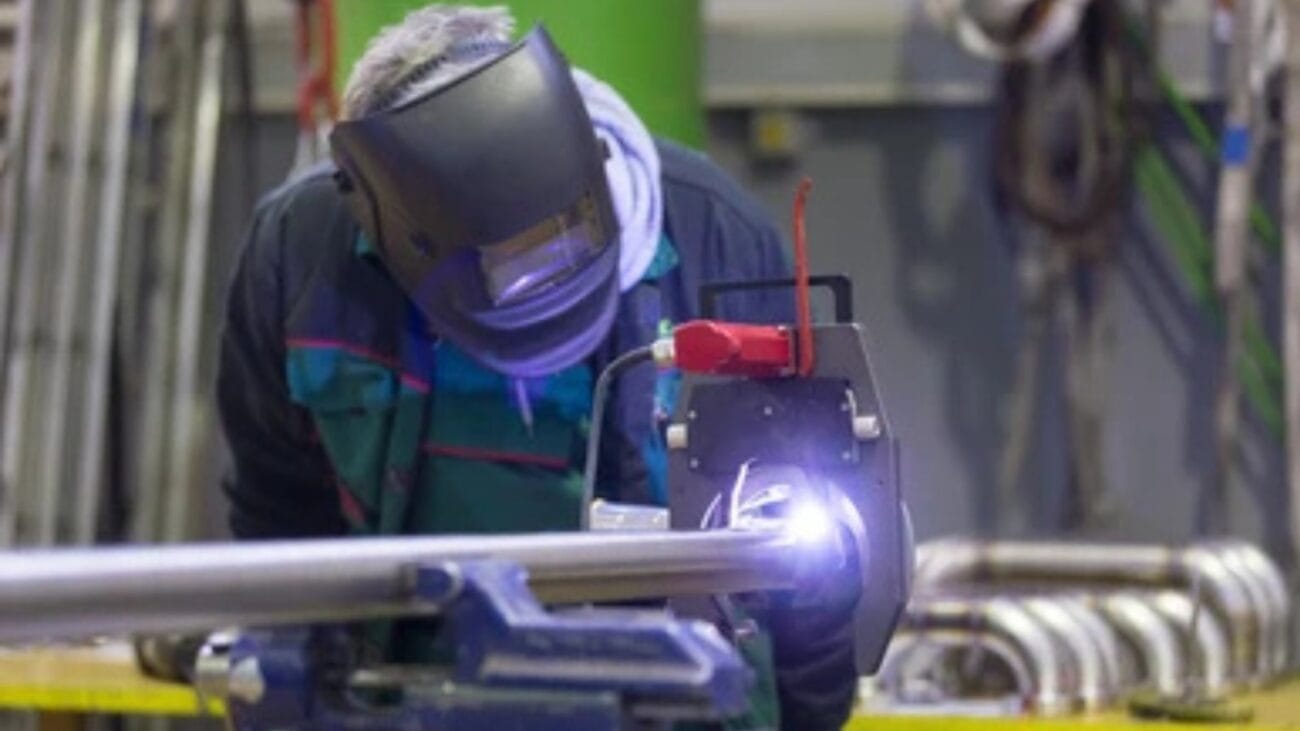
Orbital welding is a high-precision welding process where the welding electrode rotates around the pipe, creating consistent, contamination-free welds ideal for high-purity piping systems in critical applications.
What industries benefit from orbital welding solutions?
Industries like pharmaceuticals, semiconductors, food & beverage, and specialty chemicals require orbital welding to maintain high-purity standards in their piping systems for water, steam, and chemical transfer.
Why is orbital welding important for high-purity applications?
Orbital welding ensures contamination-free, repeatable welds, which are essential for high-purity applications in industries that require strict hygiene standards and leak-free piping systems.
What materials are used in orbital welding systems?
We use SS 316L, electropolished tubes, ASME BPE-compliant materials, and PTFE-lined sections for specialized piping systems to ensure maximum purity and corrosion resistance.
How do you ensure quality and compliance in orbital welding?
We conduct visual inspections, borescope inspections, helium leak testing, and provide complete weld traceability documentation to ensure that our orbital welding systems meet global quality standards and industry regulations.